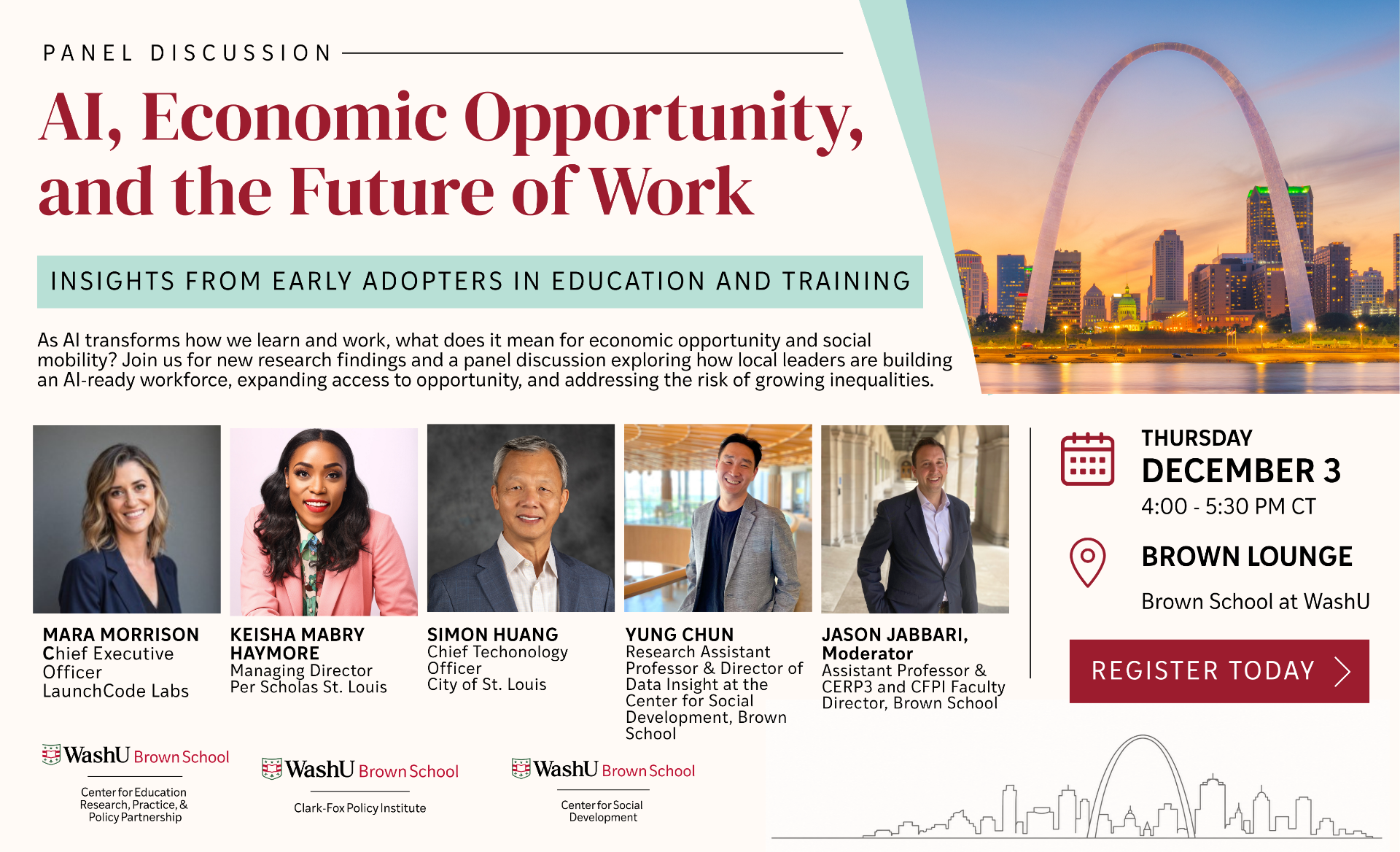
Thursday, December 3, 4:00pm – 5:30pm
Brown Hall, Brown Lounge
Light refreshments will be served
As artificial intelligence transforms how we learn, work, and navigate everyday life, what does it mean for economic opportunity and social mobility? Join the Clark-Fox Policy Institute and the Center for Education Research, Practice, and Policy Partnerships (CERP3) for a presentation of new research findings and a panel discussion exploring local responses that expand access to economic opportunity, while also highlighting the risks of reinforcing existing inequalities. Bringing together leaders from LaunchCode Labs, Per Scholas St. Louis, and the City of St. Louis, the conversation will examine the strategies that education institutions and skill providers use to create an AI-adaptive workforce, as well as how research, policy, and practice can help ensure AI creates opportunities for all.
Featured Speakers

Mara Morrison is the CEO of LaunchCode Labs, an organization dedicated to expanding access to technology careers and building a more inclusive workforce. Founded in St. Louis in 2013, LaunchCode has helped thousands of individuals gain technical skills and secure careers with leading employers. Today, the organization is helping workers and employers navigate the rapidly evolving technology landscape through initiatives like Hire Human, which focuses on preparing an AI-ready workforce and ensuring that more people can benefit from emerging technologies.

Keisha Mabry Haymore is a certified AI educator, tech leader and community builder. Keisha has been featured on National Public Radio, The Daily Show, Fast Company, Success Magazine, Huffington Post, Essence, Nine Network, The Business Journal and more for her work in business, education and technology. In addition, Keisha is the Managing Director of a Tech Bootcamp, Verizon Small Business Digital Ready Advocate, Adjunct Lecturer, Aspen Ideas Scholar, Fulbright Specialist, TEDx speaker and her book Hey Friend: 100 Ways to Connect with 100 People in 100 Days is a movement to make the world friendly again, or at the very least, friendlier than it’s ever been. She’s delivered more than 500 keynotes and workshops for Fortune 500 companies and top brands like Google, Spotify, Nielsen, Mastercard, Square, Edward Jones, Bayer, SXSW, Facebook, Ikea and YUM!. Learn more at keishamabry.com.
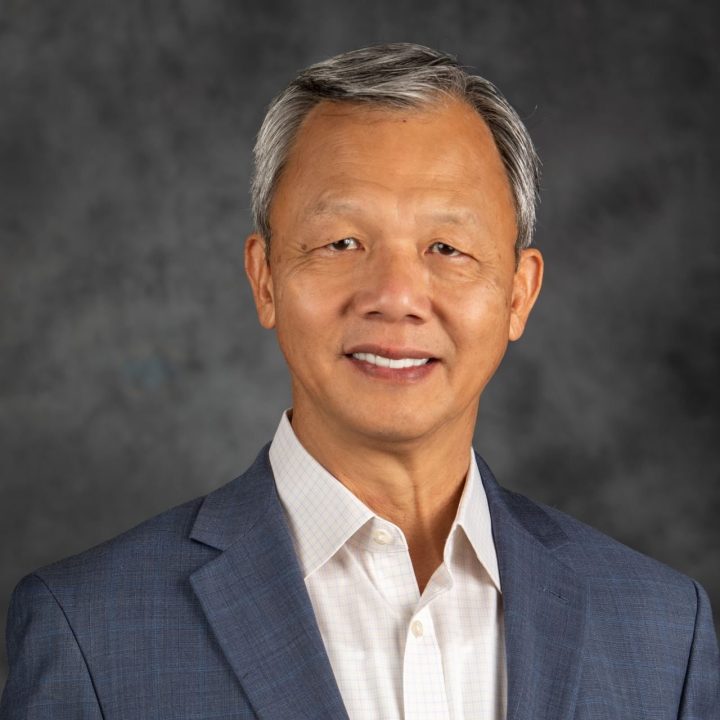
Simon Huang is Chief Technology Officer for the City of St. Louis and the St. Louis Development Corporation (SLDC). As a member of Mayor Spencer’s staff and Cabinet, he leads technology strategy, enhances operational effectiveness, and drives innovation to improve government service delivery. Committed to digital equity, Huang works to expand access to technology for residents while fostering partnerships to advance the city’s IT capabilities.
A long-time St. Louis resident, he has held leadership roles across the public and private sectors, including management consulting. Huang is active in organizations such as the Society for Information Management, FOCUS St. Louis, and the Asian American Chamber of Commerce. He holds degrees from Grinnell College and Washington University.
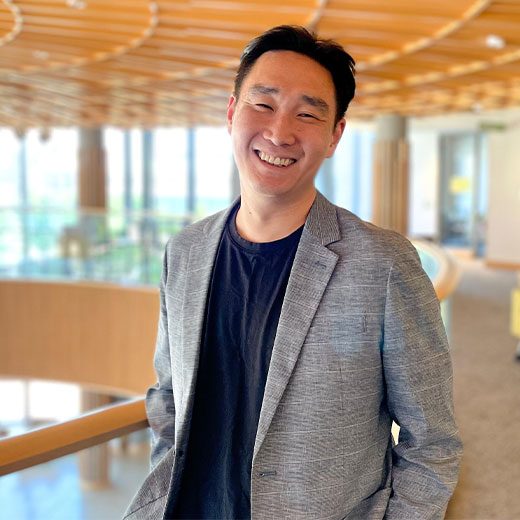
Yung Chun is a Research Assistant Professor at the Brown School at Washington University in St. Louis, the Director of Data Insight at the Center for Social Development, and Weidenbaum Center Research Fellow with Washington University’s Weidenbaum Center on the Economy, Government, and Public Policy. His research focuses on how housing and education policies shape social and economic mobility, especially for families living in poverty and communities of color.
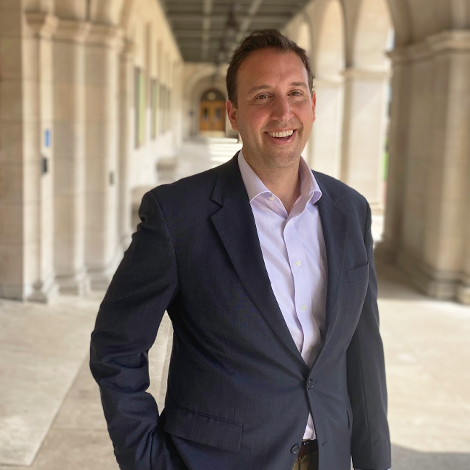
Jason Jabbari is an Assistant Professor at Washington University in St. Louis, where he directs the Clark-Fox Policy Institute (CFPI) and the Center for Education Research, Practice, and Policy Partnerships (CERP3). A transdisciplinary social scientist, his research examines how policies, programs, and practices shape human capital development and social mobility for marginalized populations.
This event is co-sponsored by the Clark-Fox Policy Institute, Center for Education Research, Practice, and Policy Partnerships (CERP3), and the Center for Social Development.