When Michael Wysession, PhD graduated from Brown with a bachelor’s degree in geophysics, he wanted to teach earth science coursework to high schoolers. The problem for him was that in the 1980s in New York there wasn’t anywhere to do that.
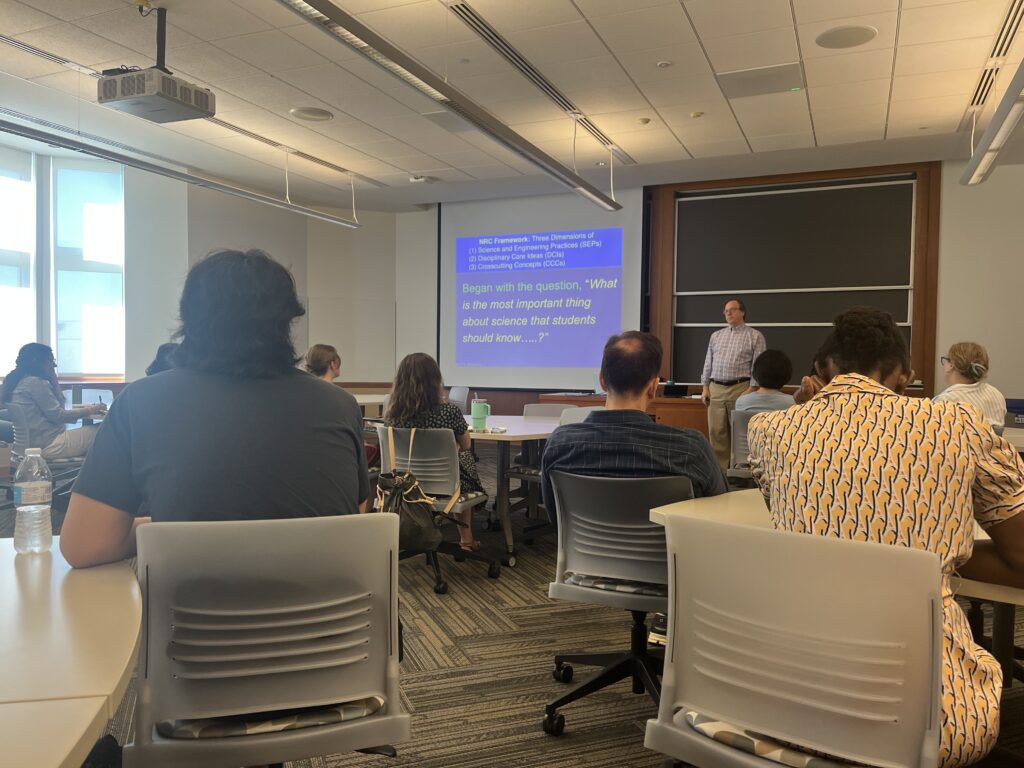
Wysession ended up teaching math and physics at Staten Island Academy before earning his doctorate from Northwestern and becoming a key voice on the subject while advocating for its teachings across grade levels. His work at Washington University includes coauthoring the Next Generation Science Standards (NGSS) in 2013 and serving as the Executive Director for Teaching and Learning. In a CERP3 seminar in June, he shared his knowledge on the past, present and future of earth science teachings across K-12 schools nationwide.
There has been a struggle to implement earth sciences and climate education into the K-12 curriculum for decades. Without licensed teachers to teach advanced courses on earth sciences or climate science, it is difficult to get those courses implemented, but it is also difficult to license teachers for courses that aren’t currently offered. To sidestep this chicken-and-egg style problem, Wyssesion’s work in writing the NGSS gives guidance on how to add important topics like climate science, earth science, and humans’ impact on the earth into existing biology, chemistry, and physics courses that currently dominate the high school science curriculum. Those NGSS standards are now being put into practice across the country, with 45 states using those standards to influence their curriculum.
Implementing those standards can better inform K-12 students on topics like environmental science, the human impact on the environment and the earth, and climate change. Wysession has covered why places in the United States are seeing extreme heat and more climate disasters.
For information on more insightful seminars and events, follow CERP3 on LinkedIn and subscribe to our newsletter.