
Join us for a discussion of the role of education in moving up the economic ladder. Learn from experts and community leaders, and share your insights on how education policy paves the way for social mobility.
After a keynote, there will be a panel discussion, in which we will explore existing and innovative programs aimed at increasing social mobility in St. Louis. There will also be a chance for you to contribute your ideas to improve social mobility in St. Louis.
Don’t miss out on this opportunity to be part of the conversation!
When: September 18, 3:00 – 5:00pm CST, Reception to follow
Where: Clark Fox Forum at Hillman Hall, Danforth Campus
About the Keynote Speaker:
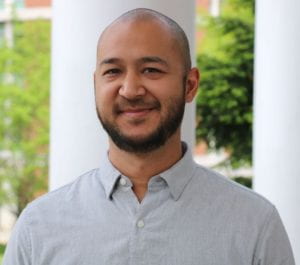
Rajeev Darolia, PhD (BSBA ’02) is the Wendell H. Ford Professor of Public Policy and a Professor of Public Policy and Economics at the University of Kentucky. He serves as Associate Director of Martin School of Public Policy and Administration, Associate Director of the UK Center for Poverty Research, and Associate Dean of the Graduate School, and he served as Chief Economist in the U.S. Department of Education in 2024-25. His research focuses on how public policy affects educational decisions and outcomes, and more broadly, economic mobility and financial security.
Mary McKay, PhD joined the Brown School at Washington University in St. Louis as dean in 2016 and currently serves as Executive Vice Provost. Her work focuses on meeting the mental health and health prevention needs of youth and families impacted by poverty, with significant expertise in child mental health services, implementation research methods, and HIV prevention. McKay has received substantial federal funding and has authored over 250 publications on mental and behavioral health, HIV/AIDS prevention, and urban poverty.
Jason Jabbari, PhD is an Assistant Professor at Washington University in St. Louis and the leader of the Center for Education Research, Practice, and Policy Partnerships (CERP3), where he studies the impact of educational policies on academic and economic outcomes. As the Director of Community Engagement at the Center for Social Development, he collaborates with community organizations to address pressing social issues. His research, supported by foundations like Ascendium and the James S. McDonnell Foundation, has been published in outlets like Urban Education, Brookings, and Forbes. He was recently awarded a CORTEX EdHub fellowship to develop a web application that connects job seekers with employers and upskilling programs in local labor markets.
Catherine Schwarz, MPP is the Senior Research Manager for the Center for Education Research, Practice, and Policy Partnership (CERP3) at Washington University in St. Louis. In this role, she oversees strategy and operations, ensuring the Center’s successful launch and ongoing impact. Previously, Catherine served as a Program Manager in the Division of Infectious Diseases at the Washington University School of Medicine and at the Center for Dissemination and Implementation within the Institute for Public Health. Her extensive experience includes various data analytics and operational roles at the Siteman Cancer Center, the City of St. Louis, and the University of Chicago Crime and Education Labs. Catherine holds a Bachelor’s degree in Economics from the University of Wisconsin-Madison and a Master of Public Policy from the University of California, Berkeley.
Victoria May is the Executive Director of the Institute for School Partnership at Washington University in St. Louis, where she collaborates with faculty to improve K-12 teaching and learning. With over twenty years of experience connecting WashU with local schools, she focuses on STEM education, teacher development, and strategic partnerships. She has led grants from the National Science Foundation and other major organizations and serves as a board member of the Missouri Mathematics, Engineering, Technology, and Science Coalition. She currently serves as the Co-Principal Investigator at the Center for Education Research, Practice, and Policy Partnerships (CERP3).
Colby Crowder, MSW is the Youth Development Advisor at the Center for Social Development. He works to investigate the effect of youth-development programming on the education and well-being outcomes of youth participants. In addition to his role at the Center for Social Development, Colby designs and implements a variety of programs, including community-engagement, literacy, and workforce-training opportunities. Colby is a graduate of the Brown School at Washington University in St. Louis and holds a BS from the University of Central Missouri.
Allison Kemner, MPH serves as the Chief Research Officer and Senior Vice President at the Parents as Teachers National Center, where she directs the Research Council and leads strategic research partnerships. She oversees research, evaluation, and learning, focusing on quality assurance, innovation, and outcomes measurement. She launched the organization’s first family-level data system and leads evaluations for initiatives like Wyoming’s MIECHV grant. Allison has collaborated on NIH-funded studies and research supported by major foundations such as the Bezos Family Foundation and Elevance Health Foundation. She also contributes to national advisory groups and expert panels, bringing over a decade of experience in maternal and child health research.
Stephen Roll, PhD is the Co-Director of Research and Policy Innovation at the Center for Social Development, specializing in asset building, debt management, and economic security for lower-income populations. His current research includes studying cash transfer programs like the Expanded Child Tax Credit and Guaranteed Income experiments, as well as a ten-year study investing in low-income students in St. Louis. His work has been featured in media outlets such as The Atlantic and NPR, and he has briefed the White House Domestic Policy Council among other high-level government bodies on his findings.
Yung Chun, PhD is a Research Assistant Professor at the Brown School and Director of Data Insights at the Center for Social Development at Washington University in St. Louis. His research examines how housing and education policies affect social and economic mobility, with a focus on families in poverty and communities of color. He uses advanced statistical and spatial methods to study built environments and social systems, analyzing programs like the Choice Neighborhoods Initiative and education initiatives for low-income students. His work on housing relocation, school choice, and STEM training informs public policy, and he has testified before the U.S. Senate and Maryland House of Delegates. His research is cited by institutions like Brookings and featured in public radio.
Saras Chung, PhD is a Research Associate Professor at the WashU Brown School of Social Work. She is a social systems scientist with over two decades of experience in youth development and system dynamics research. Her work focuses on the side effects of policies on adolescent well-being in under-resourced communities, with significant contributions through advising community investments and consulting for major organizations such as Google and the CDC.
Kelvin Adams, PhD is an esteemed academic leader who recently retired as Superintendent of Schools for the Saint Louis Public School District after 14 years of service. During his tenure with the District, he managed to regain both provisional and full accreditation from the Missouri State Board of Education for St. Louis Public Schools and increased the high school graduation rate from 54 percent to 80 percent. He now serves as the President and CEO of the St. Louis Community Foundation, where he works to create the conditions for a more equitable, connected and stable St. Louis region. Dr. Adams has significantly impacted the community through his commitment to improving educational outcomes and driving positive social change.
Sean Armstrong is the Dean of Continuing & Professional Studies at Washington University, where he is leading the transformation of the university’s professional and continuing education division. His focus is on creating pathways for economic mobility and career advancement, ensuring accessible education opportunities for residents of the St. Louis region.
Karishma Furtado, PhD is a senior research associate in the Race and Equity Division and a former equity scholar at the Urban Institute. With a focus on human-centered data, research, and storytelling, she aims to catalyze impact and advance racial equity. Previously, Karishma was a founding staff member of Forward Through Ferguson and contributed to the Ferguson Commission Report following the killing of Mike Brown. Her research focuses on the intersection of race, racism, and health and aims at advancing health equity, especially in the school setting.
Stanley Toussaint is the Director of Municipal Engagements at MoCaFi, leading the national municipal strategy and the Angeleno Connect Bank Account initiative, a public-private partnership aimed at financially empowering Los Angeles residents. He also oversees MoCaFi’s portfolio of Guaranteed Basic Income (GBI) initiatives, making it the largest in the US by dollar volume under his leadership, with programs spanning from Los Angeles City and County, CA to Birmingham, AL.
Brittany Whitley, PhD is the Director of Regional Workforce Strategy at BioSTL, where she develops evidence-based strategies to address career pathway gaps and oversees initiatives like BIOTECH for MO and the Gateway Hub. She previously served as Executive Director of MOST Policy Initiative, where she led the growth of a Missouri-focused policy fellowship that trains scientists in nonpartisan research and evidence-based decision-making.
Hosted by:
Center for Education Research, Practice and Policy Partnership (CERP3)
Co-Sponsored by:
Weidenbaum Center on the Economy, Government, and Public Policy